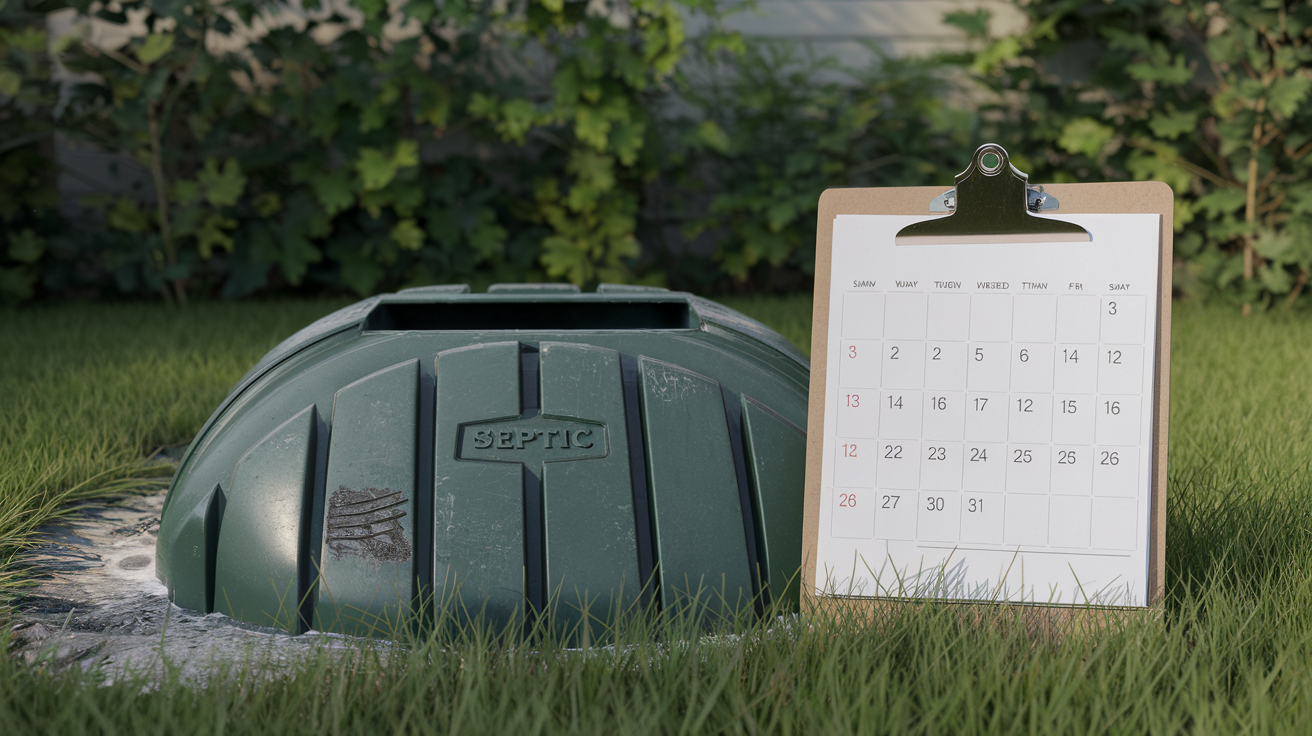
How Often Should You Pump Your Septic Tank?
Updated for 2026 · 5 min read
The standard advice is every 3–5 years. That's a solid starting point, but the real answer depends on your specific situation. Pump too infrequently and you risk drain field damage. Pump too often and you're wasting money. Here's how to dial in the right schedule for your home.
The General Rule: Every 3–5 Years
The EPA recommends that household septic tanks be pumped every 3 to 5 years. This guideline works well for a typical 3-bedroom home with a 1,000-gallon tank and average water usage. But "average" covers a wide range — and your household may not be average.
Pumping Frequency by Tank Size and Household
The two biggest variables are how much wastewater you produce (determined by household size) and how much your tank can hold. Here's a practical guide:
| Tank Size | 2 People | 3 People | 4 People | 5+ People |
|---|---|---|---|---|
| 750 gal | 4 years | 2.5 years | 2 years | 1.5 years |
| 1,000 gal | 5.5 years | 3.5 years | 2.5 years | 2 years |
| 1,250 gal | 7 years | 4.5 years | 3 years | 2.5 years |
| 1,500 gal | 8+ years | 5.5 years | 3.5 years | 3 years |
These estimates assume typical water usage and a functioning garbage disposal is not in use. If you use a garbage disposal, reduce these intervals by about 30%.
Factors That Increase Pumping Frequency
Garbage Disposal Use
Garbage disposals send food solids directly into your septic tank, significantly increasing the sludge layer. Homes with garbage disposals typically need pumping 30–50% more often. Some septic professionals recommend avoiding garbage disposals entirely with septic systems.
High Water Usage
Large families, frequent laundry days, long showers, and running the dishwasher daily all add up. More water entering the tank means less time for solids to settle, which pushes more solids toward the drain field. Spreading out water-heavy tasks throughout the week helps.
Hosting Frequent Guests
Holiday gatherings, summer visitors, or an Airbnb rental on your property all increase tank load temporarily. If you regularly host guests, factor that into your pumping schedule.
Flushing Non-Septic-Safe Items
Baby wipes, feminine products, paper towels, and other items that don't break down will fill your tank faster. Check our guide on what not to flush for the full list.
Factors That Decrease Pumping Frequency
- Small household (1–2 people): Less wastewater means slower sludge accumulation.
- Larger tank: A 1,500-gallon tank gives you significantly more buffer than a 750-gallon tank.
- Water-efficient fixtures: Low-flow toilets, faucets, and shower heads reduce overall water entering the tank.
- No garbage disposal: Keeping food waste out of the tank makes a meaningful difference.
How to Know When It's Actually Time
Beyond following a schedule, watch for warning signs like slow drains, odors, or pooling water. You can also have a professional measure the sludge and scum layers in your tank — most recommend pumping when the sludge layer reaches one-third of the tank's total depth.
Some modern systems include alarms or monitoring devices that alert you when levels are high. If your system has one, don't ignore it.
The Cost of Getting It Wrong
Pumping too late is the expensive mistake. A routine pump-out costs $300–$600. Drain field failure from neglect costs $2,000–$10,000+. Over a 20-year period, regular pumping costs you roughly $1,200–$4,000 total. One drain field failure wipes out all those "savings" from skipping pump-outs — and then some.
Create Your Pumping Schedule
- Find out your tank size (check your home inspection report or county records).
- Count the number of people in your household.
- Use the table above to estimate your interval.
- Adjust based on the factors listed (garbage disposal, water usage, etc.).
- Set a calendar reminder — most people forget otherwise.
- Keep records of every pumping, including what the technician found.
Your septic professional can also advise on the right interval based on what they see when they pump your tank. A good technician will tell you honestly whether you can go longer between visits or need to come back sooner.
Find a Septic Professional Near You
Ready to schedule a pump-out? Browse licensed septic companies in your area.
Find a Pro